PDF Ebook Richard Nixon: The Life, by John A. Farrell
As understood, book Richard Nixon: The Life, By John A. Farrell is well known as the home window to open up the globe, the life, and also brand-new point. This is exactly what individuals now require so much. Also there are many people who do not like reading; it can be a choice as reference. When you truly need the ways to produce the following inspirations, book Richard Nixon: The Life, By John A. Farrell will actually direct you to the means. Moreover this Richard Nixon: The Life, By John A. Farrell, you will have no regret to obtain it.
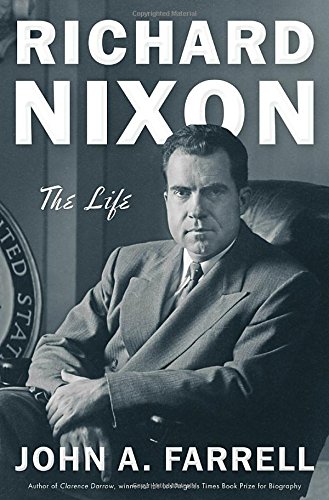
Richard Nixon: The Life, by John A. Farrell

PDF Ebook Richard Nixon: The Life, by John A. Farrell
This is it the book Richard Nixon: The Life, By John A. Farrell to be best seller lately. We offer you the most effective deal by getting the spectacular book Richard Nixon: The Life, By John A. Farrell in this internet site. This Richard Nixon: The Life, By John A. Farrell will certainly not only be the type of book that is difficult to locate. In this site, all sorts of books are supplied. You could browse title by title, writer by writer, as well as publisher by author to discover the best book Richard Nixon: The Life, By John A. Farrell that you could read now.
Just how can? Do you believe that you don't require adequate time to go with buying publication Richard Nixon: The Life, By John A. Farrell Don't bother! Simply rest on your seat. Open your gadget or computer and also be on-line. You can open or check out the web link download that we gave to obtain this Richard Nixon: The Life, By John A. Farrell By in this manner, you could get the online book Richard Nixon: The Life, By John A. Farrell Reading guide Richard Nixon: The Life, By John A. Farrell by on the internet could be really done effortlessly by waiting in your computer system as well as gadget. So, you can proceed every single time you have downtime.
Reviewing guide Richard Nixon: The Life, By John A. Farrell by on the internet can be additionally done conveniently every where you are. It appears that waiting the bus on the shelter, waiting the list for queue, or various other places feasible. This Richard Nixon: The Life, By John A. Farrell could accompany you in that time. It will certainly not make you really feel weary. Besides, by doing this will also enhance your life quality.
So, merely be here, discover guide Richard Nixon: The Life, By John A. Farrell now as well as check out that swiftly. Be the initial to read this e-book Richard Nixon: The Life, By John A. Farrell by downloading in the link. We have some other e-books to check out in this site. So, you could locate them likewise quickly. Well, now we have actually done to offer you the very best e-book to review today, this Richard Nixon: The Life, By John A. Farrell is truly appropriate for you. Never ever dismiss that you require this e-book Richard Nixon: The Life, By John A. Farrell to make much better life. On the internet e-book Richard Nixon: The Life, By John A. Farrell will really provide very easy of everything to read as well as take the benefits.
From a prize-winning biographer comes the defining portrait of a man who led America in a time of turmoil and left us a darker age. We live today, John A. Farrell shows, in a world Richard Nixon made.
At the end of WWII, navy lieutenant “Nick” Nixon returned from the Pacific and set his cap at Congress, an idealistic dreamer seeking to build a better world. Yet amid the turns of that now-legendary 1946 campaign, Nixon’s finer attributes gave way to unapologetic ruthlessness. The story of that transformation is the stunning overture to John A. Farrell’s magisterial biography of the president who came to embody postwar American resentment and division.
Within four years of his first victory, Nixon was a U.S. senator; in six, the vice president of the United States of America. “Few came so far, so fast, and so alone,” Farrell writes. Nixon’s sins as a candidate were legion; and in one unlawful secret plot, as Farrell reveals here, Nixon acted to prolong the Vietnam War for his own political purposes. Finally elected president in 1969, Nixon packed his staff with bright young men who devised forward-thinking reforms addressing health care, welfare, civil rights, and protection of the environment. It was a fine legacy, but Nixon cared little for it. He aspired to make his mark on the world stage instead, and his 1972 opening to China was the first great crack in the Cold War.
Nixon had another legacy, too: an America divided and polarized. He was elected to end the war in Vietnam, but his bombing of Cambodia and Laos enraged the antiwar movement. It was Nixon who launched the McCarthy era, who played white against black with a “southern strategy,” and spurred the Silent Majority to despise and distrust the country’s elites. Ever insecure and increasingly paranoid, he persuaded Americans to gnaw, as he did, on grievances—and to look at one another as enemies. Finally, in August 1974, after two years of the mesmerizing intrigue and scandal of Watergate, Nixon became the only president to resign in disgrace.
Richard Nixon is a gripping and unsparing portrayal of our darkest president. Meticulously researched, brilliantly crafted, and offering fresh revelations, it will be hailed as a master work.
- Sales Rank: #913 in Books
- Brand: DOUBLEDAY
- Published on: 2017-03-28
- Released on: 2017-03-28
- Original language: English
- Number of items: 1
- Dimensions: 9.50" h x 1.80" w x 6.30" l,
- Binding: Hardcover
- 752 pages
Features
Review
“Beautifully written and deeply insightful . . . A bracing portrait of a man untethered from principle and ideology, driven throughout his life to win at any cost and thereby palliate his deep-seated insecurities . . . Nixon was not an easy man to understand. And even now, his failures and accomplishments are not easy to classify. In Farrell’s capable hands, however, we see Nixon in his entirety—and we can’t help but wonder what he means for our politics today.”
—William Howell, San Francisco Chronicle
"[Nixon is] an electrifying subject, a muttering Lear, of perennial interest to anyone with even an average curiosity about politics or psychology. The real test of a good Nixon biography, given how many there are, is far simpler: Is it elegantly written? And, even more important, can it tolerate paradoxes and complexity, the spikier stuff that distinguishes real-life sinners from comic-book villains? The answer, in the case of Richard Nixon, is yes, on both counts.”
—Jennifer Senior, The New York Times
“A stack of good books about Nixon could reach the ceiling, but Farrell has written the best one-volume, cradle-to-grave biography that we could expect about such a famously elusive subject. By employing recently released government documents and oral histories, he adds layers of understanding to a complex man and his dastardly decisions . . . Outstanding.”
—Aram Goudsouzian, Washington Post
"With a mix of morbid fascination and deep empathy, Farrell humanizes Nixon, but he doesn't let him off the hook . . . The dichotomy between brooding schemer and extroverted leader has long defined the Nixon dynamic. But with Richard Nixon, Farrell has etched those history-shaking contradictions into the most vivid—and the most startling—relief to date."
—Jason Heller, NPR.org
“An extremely valuable introduction to the life and times of one of our most consequential presidents. Farrell gives us a Nixon rich in both character flaws and great accomplishments, the latter fueled by his transformational vision. It’s a worthy look at a fascinating president.”
—Ray Locker, USA Today
“Though there have been many previous books about Nixon, Mr. Farrell’s comprehensive, one-volume biography is welcome . . . In lively, vigorous prose, he takes readers through Nixon’s career, offering incisive judgments and revealing details along the way.”
—Robert K. Landers, Wall Street Journal
“Superb . . . the most formidable attempt yet made to put Richard Nixon in perspective.”
—Steve Donoghue, Christian Science Monitor
“Farrell is an exceptional writer . . . It may not have been Farrell’s intent to produce a cautionary tale about the dangers of a presidency run aground on lies, paranoia, prejudices, and delusion, but that’s what he’s accomplished.”
—Publishers Weekly, starred review
“Farrell’s blockbuster portrait of Nixon is revelatory—filled with fresh reporting shedding new light on the roots of our own dark political moment. He shows that dirty tricks, October Surprises, and anti-elitist resentment were among the gifts Nixon bequeathed to our own presidential politics.”
—Jane Mayer, author of Dark Money: The Hidden History of the Billionaires Behind the Rise of the Radical Right
“John A. Farrell has once again delivered a rich, precisely written portrait of the past to help us understand the present. He traces the origins and turning points of one of the most complex, complicated and fascinating presidents of the modern age with flair and narrative skill. Each page is a joy to read, on the way to a very satisfying whole.”
—John Dickerson, moderator of CBS’s Face the Nation and author of Whistlestop
“Brilliant, ruthless, a president who combined some enlightened policies with inner darkness, Richard Nixon stands alone in the history of American politics. John A. Farrell’s gripping account vividly captures Nixon from his earliest days—catapulting to Congress with a cold-blooded debate stunt—to the mounting crises he faced in the White House, culminating in his spectacular fall.”
—T.J. Stiles, Pulitzer Prize-winning author of Custer’s Trials and The First Tycoon
“In Richard Nixon, John A. Farrell is tough and unyielding, yet gives his subject a fair hearing through each gripping episode. ‘I’m not a quitter,’ Nixon once protested, and this grand, indispensable book proves him right, right to the end.”
—Chris Matthews, author of Kennedy & Nixon: The Rivalry that Shaped Post-war America
“Jack Farrell gives us two profoundly resonant Richard Nixons—the last progressive Republican, and the author of our national divisions. He also gives us, in one engrossing volume, the defining biography of our darkest president.”
—Larry Tye, author of Bobby Kennedy: The Making of a Liberal Icon
“With clarity and verve, John A. Farrell’s deft pen illuminates the life of America’s 37th president. Unsparing yet fair-minded in its analysis and based on deep research in a wealth of archival and published sources, Richard Nixon is a fast-moving and penetrating portrait of this controversial and complicated man.”
—Fredrik Logevall, Pulitzer Prize-winning author of Embers of War
“John A. Farrell's Richard Nixon: The Life is an expertly written and strikingly comprehensive portrait of America's most complicated president. Farrell has a genius for the telling anecdote and apropos quote. His command of the sources is staggering. Richard Nixon is a true landmark achievement.”
—Douglas Brinkley, Professor of History at Rice University and author of Cronkite
“Full of fresh, endlessly revealing insights into Nixon’s political career, less on the matter of his character, refreshingly, than on the events that accompanied and resulted from it.”
—Kirkus Reviews, starred review
“A probing biography . . . Readers track the lonely and hard-won ascent of a sickly, love-starved child, who dreams like a Romantic but maneuvers like Machiavelli . . . An unflinching portrait.”
—Booklist, starred review
About the Author
JOHN A. FARRELL is the author of Clarence Darrow: Attorney for the Damned, which won the Los Angeles Times Book Prize for Biography, and Tip O'Neill and the Democratic Century. A longtime journalist, he worked at The Denver Post and at The Boston Globe, where he served as White House correspondent and on the vaunted Spotlight team.
Excerpt. © Reprinted by permission. All rights reserved.
Chapter 1
The Dragon Slayer
The United States had throttled its foes with steel. Now it was time to stand down and go home. Navy lieutenant John Renneburg was stationed at the Glenn L. Martin Company aeronautics complex near Baltimore in the summer of 1945. It was a sprawling plant where the firm’s big flying boats were built, then tested on the Chesapeake’s tranquil waters. In a single year at the conflict’s peak, American factories churned out ninety-six thousand warplanes—almost as many as those manufactured by Nazi Germany in seven years of war. The Martin plant was emblematic: one of the largest aviation works in the world, with fifty thousand employees building seaplanes, bombers, and other aircraft.
With victory, the nation faced a vast demobilization. The press brimmed with foreboding about the pain of “reconversion” to a peacetime economy. The army sent out thirty thousand telegrams canceling 95 percent of its orders for artillery, tanks, and other instruments of war. The navy stopped construction on a hundred ships. What the government needed now were regiments of lawyers to settle its contracts. That was Lieutenant Renneburg’s job until new orders arrived. He was going home, just as soon as he could train a replacement.
The man the navy sent was a dark-haired, dark-eyed veteran of the fighting in the Pacific, Lieutenant Richard Nixon. After returning from the Solomon Islands, Nixon had been given a course on federal contracting. He and his wife, Pat, bounced from Washington to Philadelphia to New York and ultimately to Stansbury Manor, a complex of two-story apartment buildings on a cove near the Martin airfield. In this pleasant backwater, he and Renneburg spent their days haggling with the firm’s accountants on behalf of the navy’s Bureau of Aeronautics.
Renneburg found Nixon smart and serious, yet amiable. The work was demanding, “and about the only chance we would have to relax would be when we would walk down to the officers’ mess,” a bit more than a quarter mile away. They spoke about music, for which they were both enthusiasts, and swapped stories about their wartime experiences. Inevitably, the conversation turned to civilian life, Renneburg remembered, and one day “I asked him what he was planning to do.”
It was a warm day, Indian summer. Nixon didn’t really know, he told his colleague as they ambled. The navy had offered him a promotion to commander. The world of business beckoned, and he and Pat were entranced by Manhattan. If nothing else turned up, his law partners had kept his old job open in his little hometown of Whittier, California. And then—out of the blue, Nixon said—he had gotten a letter from some folks back home who wanted him to run for Congress. It was a long shot: he would be chal- lenging a five-term incumbent. Nevertheless, intrigued, he had waited for the cheaper nightly long-distance rates and discussed it over the telephone.
“I’m not a politician,” Nixon told Renneburg. “I probably would be defeated.”
“I hope they didn’t reverse the charges,” his colleague said. “No, they didn’t.” Nixon smiled. “They seemed to be serious.”
Renneburg urged him to accept the offer. He admired Nixon’s qualities and thought he’d make a good congressman—a voice for a new generation in uniform coming home from war and seeking to build a better world.
“Even if you get defeated, you might get some clients,” Renneburg told him. “Somebody might remember the name of Nixon.”
For the very few who knew him well, the notion of “Congressman Nixon” was not exceptionally odd. All his life, he’d displayed an interest in history and politics. He was disciplined, hardworking, bright, and earnest, and had shown a rudimentary knack at winning school and club elections in Whittier. But those whipstitch contests were years ago. The congress- man who represented the Twelfth Congressional District—Representative Jerry Voorhis—was a sturdy veteran of the House Democratic majority propelled to office by Franklin D. Roosevelt’s mighty New Deal coalition. In polls of the capital’s press corps, and of his fellow congressmen, the handsome, pipe-smoking Voorhis won top-ten rankings for diligence and integrity. He was the son of a retired automobile executive whose wealth could finance his campaigns. His constituent service earned him the loyalty of the district’s farmers and citrus ranchers, for whom he ably labored on the House Agriculture Committee, a coveted perch. In the three most recent elections, the Republicans had tried to supplant him with a popular coach, a celebrity preacher, and a respected businessman. He had whipped them all. Richard Nixon—Dick, to his friends and family; Nick in the navy; Nixie in college and Gus during law school—was thirty-two years old in 1945; not a bad-looking guy in his dress blues. “He looked so different: younger, real tanned, thinner, and of course very handsome in his blue uniform with all the braid and the white cap,” Pat wrote his parents.
Age would accentuate the flaws in his features—jowls, the spatulate nose and receding hairline—but not for decades. His hair was thick and black and wavy. His deep-set eyes were the darkest brown, and his face pleasantly symmetrical, especially if he’d just relax and grin. Glee clubs and choirs prized his voice, and he was a more than capable pianist. He liked Chopin and Brahms. “He is a romanticist at heart, but he doesn’t like to let this show,” a music teacher would recall.
Nixon had played on the football team in college, but only because they needed bodies to fill out the squad, for he was no athlete. His feet were big, his chest narrow, and his shoulders sloped. The navy had taught him to stand up straight, but his natural posture was to slouch, hands dangling.
His mind was his defining feature. It was sharp and analytical; his memory remarkable. He enjoyed little more than sprawling in an armchair with a yellow legal pad, chin on his chest, legs on a footrest, thoughts marching through his head. He liked it there, in that restless mind. It was where, in the unhappy times of his boyhood, he had fled. He was a daydreamer, a cloud counter, a bookworm as a youth, and at night he would lie in bed listening to the train whistles, conjuring the marvelous places he would go. He could be there with you without being there, seem like he was listening while his thoughts were far away. He passed folks on the street and didn’t see them; walked into them in hallways, offered a distracted nod and half a wave, and kept going. Some thought he was stuck-up, rude, or dour.
He wasn’t easy to like. He knew it, and it hurt. “All over town people talk about what a good natured fellow Don is and wonder how he could have such a sour puss brother,” he had written from the South Pacific in 1943, describing himself in a wartime “V mail” to his niece Laurene, the newborn baby daughter of his brother Donald. He welcomed her to the world, gave her “the scuttlebutt about your new relations,” and touched, as a Quaker, on war’s iniquity: “My hope for you is that when you are 17 your boyfriend won’t have to use V mail to write.”
It was a sweet letter, and some who saw that side of him found his awkwardness, that ungainly shyness, endearing. A friend liked to tell a story about Dick helping out with the dishes after dinner, leaving the kitchen and drifting through the house with a single glass, wiping it over and over, well past dry, transfixed by a speech he was crafting in his mind for an upcoming high school debate. It was a distinctive personality, peculiar even. Some accepted his preoccupation, but others saw calculation and gave him no credit for his dreaming.
He was given to small kindnesses, to bringing red roses to shut-ins, or sending little gifts of money to those who had fallen on hard times. At law school he befriended a disabled young man, put him on his ticket in a student election, and carried him up granite steps to class. He was a striver, a self-improver, and so—given the faults in his personality—an actor. If in small talk he was achingly inept, during high school and college he had thrust himself onstage—in school plays, collegiate debate, and public speaking competitions. He became a fine performer, his teachers recalled. His self-discipline was legendary, his preparation thorough. Others might come to rehearsal without knowing their lines; not Dick Nixon. He could lose himself in craft, ingest emotions, and affect and excite an audience. He yearned, above all, to be a great man. He had that sense of drama.
Nixon was looking to jump-start his life in those weeks after the war for, truth be told, he was a bit of a flop. He had excelled in high school and been offered an opportunity to study at Harvard or Yale, but his family’s tottering finances prohibited it, and so he had attended little Whittier College, enrollment four hundred, where the faculty was well intentioned but undistinguished. There he could live at home and continue to work at his father’s grocery store. It galled him. The crowning moment in his schooling was the day he was accepted, with a scholarship, to study law at Duke University. He showed not just happiness, but bliss at the prospect of escape. He was “not only fun, he was joyous, abandoned—the only time I remember him that way,” his college girlfriend said. But though he graduated from Duke with honors, he could not find work with a Wall Street firm. He applied, without success, to the Federal Bureau of Investigation. Finally, his mother prevailed upon a family friend to give Dick a desk in a local law office, and back he slunk, Mr. Nobody from Nowhere. Nixon’s first notable case was a disaster: he and the firm were sued for negligence and penalized thousands of dollars. He went bust at business, too. A scheme to market frozen orange juice failed, leaving him fending off irate creditors.
He was luckier in love. Pat was a spirited beauty—a gypsy, a vagabond, he fancied her—with looks that had earned her bit roles in Hollywood and a job modeling clothes in a swank Los Angeles department store as she worked her way through the University of Southern California. He was drawn to her pilgrim soul. Thelma Catherine Ryan (like Dick, she collected nicknames: Buddy in her youth and Pat as she grew older) was a fellow striver. She had been born in a Nevada mining camp, orphaned in her teens, and compelled to assume the household chores—cooking, laundry, cleaning—for herself and two brothers. Free of that drudgery, college degree in hand, she had no wish to be tied down and had resisted Dick’s advances. His intensity was off-putting. But he persevered—for resilience was another of his defining traits—and in time she came to see him as a man of destiny. As a gift, she gave him a figurine, a mounted knight on a charger. She was “willing to submerge her entire life to him,” said a friend. Her faith was his great asset.
For their honeymoon they filled a car’s trunk with canned goods and set off on a road trip through the Southwest and Mexico. As a wedding prank, their friends had stripped the labels from the cans, and they’d end up eating stew for breakfast. For their first anniversary, they drove to New Orleans, split an order of Oysters Rockefeller at Antoine’s, and rode a steamer around the Caribbean. In 1941, they had leapt at the opportunity to move to Washington, where big things were happening. But Nixon’s work as a bureaucrat in the Office of Price Administration, writing rationing rules, was stifling, and he felt out of place among the East Coast whiz kids—the Ivy League liberals and bright, left-leaning Jewish attorneys who served the New Deal as men-at-arms. Six months after Pearl Harbor, recognizing his duty and yearning for excitement, he enlisted.
They sent him to a navy air training station—carved, incongruously, from the landlocked cornfields of Ottumwa, Iowa. He was newly married and a Quaker, and it was safe there in the Midwest, pushing paper. But displaying his sense of obligation, he lobbied for a transfer to combat. “Sir, I have a letter from Lt. (jg) Richard Nixon . . . now in Ottumwa, Iowa— legal officer & crying his heart out” to get into Air Combat Intelligence, a superior noted. “He is a good one . . . young, no children & wants A.C.I.” A man could get himself killed, friends told him. Dick should leave the fighting to the single men, Pat’s brother advised. But Nixon was insistent, and ultimately, the navy shrugged and dispatched the young lieutenant to the war zone.
In the South Pacific, Nixon served on a series of island outposts where he supervised the work of a combat air transport team, moving ammunition, reinforcements, and food and medicine to the front, and the wounded to the rear. He wrote to Pat, telling her not to worry about the recur- rent Japanese shelling and bombing, for only the morons who refused to take shelter got killed, and his bunker on Bougainville was roomy and protective—with a roof of logs and sandbags. There was plenty of down-time, much of which he whiled away in the discordant style of a fighting Quaker—reading his Bible or playing poker. He sent aching letters to her and read voraciously, copying down odd lines of speech and poetry, tearing out articles from magazines and newspapers and jotting his thoughts in the margins, or in journals he kept, about such disparate subjects as the female enigma, the ability of civilian populations to endure strategic bombing, the role of China in world affairs, and the dark sides of human nature.
In a moment of self-recognition, perhaps, he jotted down a line, attributed to Tennyson, from a pulpy short story in Collier’s magazine: The most virtuous hearts have a touch of hell’s own fire in them.
“He was struck by what he was learning about men,” said Albert Upton, a favorite college instructor with whom Dick corresponded. “It was the first opportunity that he had ever had, I think, to see how much evil there is in the world around you, not just how much evil there is in Shanghai or Timbuktu, but how much evil there may even be in Whittier, California, where supposedly everybody goes to church.” Nixon came to loathe the disorder and waste of war. Writing to Upton, he spoke of the need for moral rearmament, a Christian movement that taught brotherhood, peace, and spiritual purity. His heroes were Abraham Lincoln and Theodore Roosevelt, and Woodrow Wilson, who had tried to build a structure for peace and convey America’s democratic values to the world. “Men’s hearts wait upon us,” Wilson had said in his first inaugural—words that Nixon would one day cite in speeches. “Who dares fail to try?”
There is cool and there is square, and Richard Milhous Nixon was nothing if not square. Duty called. Work got done. Yet he was no martinet, and something of a happy finagler, treating his enlisted men to a ham dinner after helping to “liberate” the meat from a passing plane and finding beer for the Seabees, who in turn built a comfortable hut—complete with shower—for Nick and his fellow officers. He was generous with the loot. Pilots relished the offerings at “Nick’s Snack Shop,” the hut at the airfield where they could wind down over hamburgers, coffee, or cold pineapple juice between missions. He learned how to cuss. And for a good Quaker boy, raised in a pious community, he proved a shark at cards. The amount of his winnings would be exaggerated over the years, but by the time the war was over, lumped in with what he and Pat saved from their paychecks, they had put aside some $10,000.
After fourteen months his tour was over. He flew out, with a refueling stop at a Pacific island. “It was one of those rare nights . . . a soft full moon, not as warm as usual, just the whisper of a breeze in the air,” he would remember, and he strolled to stretch his legs. He came upon the “lonesome beauty” of a military cemetery—“no lawn, no monuments, the simplicity of white crosses in the white sand”—and pondered the loss. He yearned “for the building of a new world, which would not know the horror of war.” And then he was home and caressing Pat at an airport gate.
They were in New York when, on August 14, the Japanese surrender was announced. With two million other revelers, Pat and Dick headed to Times Square. They walked around the city, through downtown’s ethnic neighborhoods and up Fifth Avenue. “It was the largest, happiest mob I ever saw. Service men were kissing all the unescorted girls and the girls didn’t mind a bit. . . . Chinatown looked like Christmas Eve with Fourth of July thrown in. . . . Flags, banners and decorations of all description covered the buildings,” he wrote his parents. He and Pat stopped in at St. Patrick’s Cathedral, crowded with the faithful offering prayers of thanks. “I only hope we can keep this peace,” he wrote.
Years later, remembering, Nixon saw the war as “the catalyst” that had transformed his interest in politics into a sense of mission. He was a realist about human behavior, but his generation had an obligation, he believed, to find a better way. “He seemed to be dreaming about some new order which would make wars impossible,” said Gretchen King, who had befriended Pat while her husband was at war and spent time with the couple after he returned. “He impressed us in those days as an idealistic dreamer.”
The war “turned a great many of them with a very high idealistic feeling into politics,” said Adela Rogers St. Johns, a California journalist and Whittier neighbor who came to know Dick well. “He came back with that very strong feeling, that we fought a war, a good many men had died to save this country, and now, let us make it what those boys had died for.”
And yet . . . Congress. No matter how he’d grown, he was still Dick from Whittier, that “eddy on the stream of life,” as a college classmate called it. People there were isolated and parochial: by choice they kept the highways outside town. Sure, the Quakers saw him as a fair-haired boy—he had been elected to student office in college, chosen to lead the junior Kiwanis club, and appointed to serve as an assistant city attorney. But he had never campaigned for public office and was thoroughly unknown in the rest of the vast Twelfth District. The lives of American presidents are often cast as Horatio Alger tales, and the stories of their rise barnacled with myths. Yet few came so far, so fast, so alone, as Nixon. Not the governor of California or his aides, nor any member of the state’s delegation to Congress knew Richard Nixon’s name. He was, he would remember, “somebody who was nothing.”
And charm, for Nixon, was an act of will. He had endured a dismal childhood, awash in gloom and grief. Two of his brothers died of gruesome illnesses. His father, Frank Nixon, was a cranky blowhard—a grade- school dropout who had come west from Ohio, married into local Quaker gentility, been staked by his in-laws to a farm in nearby Yorba Linda, and managed to fail at growing lemons in one of the planet’s most bountiful citrus belts. Frank moved from farming to pumping gas and then opened a grocery store. They lived not in the tree-lined neighborhoods of town, but out on the highway, where Frank peddled groceries from an abandoned church. He conferred resentment to his son.
In the South Pacific, Dick had joined in camaraderie and learned how to lead. But the notion that he could return to California after four years away, engage the voters of the sprawling Twelfth District, and defeat a veteran congressman seemed inconceivable. He had no name, no fortune, no political machine.
What he had was Herman Perry.
It was Perry, the vice president and branch manager of the Bank of America in Whittier, who had sent the letter inviting Nixon to challenge Voorhis. It arrived by airmail. “Dear Dick,” Perry wrote on September 29, 1945. “I am writing you this short note to ask you if you would like to be a candidate for Congress on the Republican ticket.” The banker didn’t offer much information. The incumbent was a Democrat, he noted, and the voters in the district were split almost evenly between Democrats and Republicans. In a postscript he remembered to ask Nixon: “Are you a registered voter in California?”
Perry, a native Indianan, was a man of stature in Whittier. He had arrived in Southern California in 1906, when the town had but a few hundred families, at the height of one of the Southland’s booms. Ads hailing a West Coast paradise had dotted newspapers across the Midwest, luring people to Los Angeles and its sensuous climate. Two railway companies ran a thousand miles of streetcar line, like radials in a spider’s web, west toward the beaches and out into the empty desert. The city fathers, with infamous duplicity, swiped a precious water supply from the far-off Owens Valley. Thickets of oil derricks dotted the coastal plain. Hollywood was incorporated, and daft developers launched projects like Venice-by-the-Sea, complete with canals and gondolas. The population of Los Angeles County soared from 33,000 in 1880 to 504,000 in 1910. Most of “the Folks,” as they were called, were transplants from the heartland: shopkeepers like Perry or farm folk like the Milhous clan—who dismantled their Indiana home and shipped the timbers, doors, and windows by train for reassembly in Whittier.
The town had been founded at century’s turn by prosperous, cliquish Quakers, who gave it its insular character. They were of a western strain of the faith: less plain and pacifist, more smug and businesslike. “I was never asked inside a Friend’s house, in the more than forty years I lived in Whittier,” recalled the writer M. F. K. Fisher, the daughter of the local newspaper editor, an Anglican. Many of the townsfolk were gentle and fine, but others in “that land of thees and thous and daily snubs” were “sanctimonious bastards,” she remembered. Drinking was outlawed, smoking, card playing, dancing, and flirtation discouraged.
Perry shifted to finance, rising to the role of local consul for California’s own Bank of America, whose monopolistic practices fueled its transformation from a San Francisco storefront to the world’s largest bank. Stout and stouthearted, he was the town’s Mr. Republican: representing his neighbors on the county committee and making sure that their sober sentiments were reflected at the polls on Election Day. People called him “Uncle Her- man,” but his style was as stern as it was avuncular. In that part of Los Angeles County, “he was Bank of America,” Donald Fantz, an appliance store owner, recalled, and “it was a privilege to be able to go and pull up your chair alongside his desk if you had some problems or something, and talk them over with him.” Yet Perry was “ruled by his head, certainly, and not by his heart. I mean, he was a banker, first and foremost. Herman Perry would react on cold facts.”
Among those who had turned to Perry for loans was Frank Nixon, who arrived in Whittier from Ohio in 1907. Perry had been a guest at Frank’s wedding to Hannah, a classmate of Herman’s and the daughter of fellow Hoosiers. The bank’s credit helped the Nixon store survive the Depression, and Perry’s son Hubert attended high school and college with Dick. When Dick returned to Whittier from law school at Duke, his office was in the Bank of America building, the Beaux Arts landmark on Philadelphia Street that towered above the groves of citrus like a Crusader castle on the Levantine plain.
Herman Perry had two great unmet goals in life: to be a lawyer and to serve in Congress. And he found in Dick “a kind of fulfillment of his own ambitions,” said Hubert, who had tried and failed at law school himself. “I . . . might even say that I thought my dad was disappointed in me and looked upon Nixon as his favorite son. . . . He saw in Dick Nixon his own dreams that he couldn’t make happen.”
In 1944, Don Lycan, a vice president for Signal Oil & Gas, the largest independent oil company on the West Coast, had called on his friend Herman. Lycan was leading a drive to dump Voorhis, but since the oil industry was a scandalous font of corruption at the time, he had come in need of a front man. Perry was willing to play the role, but it was a fool’s errand, he told the oilman: the congressman was too popular. Not so, Lycan argued. “If we really get serious we could beat him.” The country was heading hell-bent to socialism and Voorhis had to be stopped. Lycan promised Perry that California’s oil and business interests would supply the necessary funds.
Voorhis, a graduate of Hotchkiss and Yale, held views that decidedly tilted left. In his youth, during the Depression, he had been a member of the Socialist Party, and in Congress he had angered more than oil executives. His proposals to increase the authority of the Federal Reserve Board vexed banks. He infuriated manufacturers and big agricultural interests with his support of labor unions. He sought to subject insurance companies to tougher antitrust rules. And when voting for the New Deal’s expansive structure of price controls, rationing, and commercial regulations, Voorhis irked many of the conservative small-town businessmen who, with the farmers and citrus ranchers, were core voters in his district. They had kept an aggrieved silence during the crises of war and depression but now were finding their voice. Roosevelt’s programs sapped individual initiative, these self-made men believed; made people soft, serf-like, and dependent on government.
As Perry predicted, the 1944 campaign was a failure. The Republican candidate, oilman Roy McLaughlin, was “a very presentable elderly man,” as one of his fund-raisers put it, but he lacked the vim to unseat Voorhis. The Republicans tried to make an issue of the congressman’s support from left-leaning labor unions, but McLaughlin was not the kind of gut fighter to call Voorhis a Communist and make it stick. Nor was the moment ripe: it was still wartime, and Uncle Joe Stalin was America’s ally.
Knowing that McLaughlin was headed for defeat, Perry retained $500 from the $2,000 that Lycan had given him. A seed had taken root. When they met again in 1945 to assess the situation, the convert was preaching to the prophet. Perry knew a young man—a navy lieutenant named Nixon—who could beat Voorhis. He would write him, Perry told Lycan, and use the $500 to buy him an airplane ticket to California. And one more thing, Perry said: they would need much more than $2,000 this time. The oilman heard him out, grunted, and said, “All right, go ahead. My friends and I will supply you with the additional funds.”
There was little chance that Dick and Pat would not leap at the opportunity—they pictured each other, after all, as a bold chevalier and his gypsy love. “I was a bit naïve . . . a dragon slayer I suppose,” said Dick. But in their Maryland apartment, reading and rereading Perry’s letter, they suppressed their excitement, forced themselves to act responsibly, and weighed the prospects. Money was the chief consideration: the election was a year away, and Dick would have no paycheck once he left the navy. They had their $10,000 to fall back on, but no home or car. Moreover, Pat was pregnant, and the baby due in February. Yet the war had given them, like many in that generation, a taste for the dance with fate. They saw this was their shot—the moment they had been chasing since the mean days of their youth, their ticket out of dullsville. Pat “liked adventure,” Dick remembered. “She knew my interests. . . . She thought that it was very important to live an exciting life.”
“I married a crusader,” Pat would say, in turn. “I suppose there never was much question about it.”
The odds, a year out, looked “relatively hopeless,” but Nixon had a hunch that times were changing. Roosevelt had died in April 1945. Folks were tired of the regimentations of the New Deal and the war; sick of sacrifice, hungry for latitude and liberty. They wanted to fill their cars with gas, “use a second chunk of butter, watch the long lazy curl of a fishing line flicker in the sunlight, or get royally tight, without feeling that they were cheating some GI in the flak over Berlin or on the bloody ash of Iwo Jima,” wrote the Cold War chronicler Eric Goldman. While stationed in the South Pacific, Dick had met Harold Stassen, the Republican “boy governor” of Minnesota, who had resigned his office to serve in the navy. They talked about postwar politics, and Stassen predicted a “radical change in the political weather” when the fighting was over. A young veteran, running as a fresh new voice, could “cash in,” Nixon concluded.
So this was risk, but not folly. Perry’s letter “sparked something” in his friend Dick, Hubert Perry remembered, “like a minister getting a call from Jesus.” Dick and Pat didn’t have much, so they didn’t have much to lose. And as his friend Renneburg said: if Nixon was defeated, he could use the publicity and the connections he would make to land at a big Los Angeles law firm. Dick told Pat: “Let’s do it.”
It wasn’t quite that simple, Herman Perry warned him when they spoke on the telephone in the first week of October. Nixon would have to audition before a group of Republican activists and survive a primary. There were names floating in the press—men like General George Patton, the war hero, and Walter Dexter, the state superintendent of education—who could have the nomination if they wanted it. But Pat and Dick were all in. “After having been away for such a long time . . . it was certainly a wonder- ful surprise to learn that I was even being considered,” he wrote Perry in a follow-up letter on October 6. “I feel very strongly that Jerry Voorhis can be beaten and I’d welcome the opportunity to take a crack at him.” He promised to wage “an aggressive, vigorous campaign of practical liberalism” to replace “Voorhis’s particular brand of New Deal.” The congressman’s “lack of a military record won’t help him, particularly since most of the boys will be home and voting,” Nixon noted. He had just been promoted to Lieutenant Commander and with his savings would be able “to stand the financial expense” of a yearlong campaign. He promised “to tear Voorhis to pieces.”
The Republican establishment was not as ardent. The party machinery in the Twelfth District was dominated by a handful of aged men and women who had concluded that it was hopeless “to get a substantial per- son to run against Mr. Voorhis, because he was defeating his opponents by such huge majorities,” recalled Earl Adams, a young, politically minded lawyer from San Marino. “Very few people wanted to be crucified.” Nor would there be help from Washington or Sacramento. Governor Earl Warren was Republican, but almost in name only. Like the popular former governor and U.S. senator Hiram Johnson, who died that year after thirty- four years in office, Warren ran as an independent progressive Republican, appealing to all persuasions in California’s unpartisan political tradition, and staying out of local races. The Twelfth District had undergone redistricting after the 1940 census, and Republican lawmakers had stripped Voorhis of some of his stronger wards in East Los Angeles, yet he had pre- vailed in 1942 and 1944. Voorhis couldn’t be beat, the Republican elders decided, certainly not by some navy lieutenant.
“My first impression of Nixon was that here was a serious, determined, somewhat gawky young fellow who was out on a sort of a giant-killer operation,” recalled Kyle Palmer, the chief political writer for the Los Angeles Times, the region’s biggest newspaper. Palmer, a likable tough guy with piratical instincts, acted with the blessing of the paper’s conservative owners as the state’s premier political power broker. “The Republicans—including myself—generally felt that it was a forlorn effort.”
And so, if it were to succeed, the crusade would have to be launched outside the normal party channels. It emerged in the form of the ad hoc “Twelfth Congressional District Republican Candidate and Fact Finding Committee,” which came to be known as the “Committee of 100” (for the approximate number of its members) or, to themselves, as “the Amateurs.” Roy Day, a gruff forty-four-year-old advertising salesman from Pomona, was the organizer. He ran the commercial printing business of a local newspaper and was one of those indispensable men who answered a community’s call when its service groups—the Lions Club, the Chamber of Commerce, the Campfire Girls—needed an indefatigable wheel horse. He was an adman, a booster. Bullheaded, he had been drawn into politics in 1944 when a Republican state legislator died in mid-election, and Day organized a friend’s victorious write-in campaign. The experience had exposed him to his party’s complacency. “I got disgusted,” he recalled. “We were blowing our own ball game.”
Day volunteered to serve and, with the blessings of the Los Angeles county chairman, recruited the rump “fact-finding” team. He picked the number—one hundred—out of the air and roamed the district, talking to Republican club women, local committeemen, and business leaders like Perry; Roy Crocker, fifty-two, a savings and loan executive from tony San Marino; and J. Arthur Kruse, forty-seven, the chairman of a thrift from the district’s biggest community, Alhambra.
“We younger men didn’t realize that it was impossible. We were ignorant,” recalled insurance man Frank Jorgensen, forty-three, a self-described “irascible son of a bitch” from San Marino. “We young bucks came in and got busy. . . . We didn’t know top from bottom how to run a campaign. Except we were businessmen and we knew how to sell. We took the position that a political campaign was nothing more than selling a product.” The initial gathering was at Eaton’s, a sprawling hotel and restaurant on Route 66, near the Santa Anita racetrack. Over coffee or lunch, in hotel meeting rooms and at neighborhood cocktail parties, they refined their vision of a winning candidate: Young. Educated. Married. A veteran. Most of all, an aggressive campaigner.
The Twelfth District was the largest and most rural in Los Angeles County, a polyhedron with clusters of towns at its vertices and several hundred square miles of citrus, walnut, and avocado groves and dust-brown hills and ridges in between. At the base were Nixon’s old haunts of Whit- tier and La Habra, where Perry and his associate at the Bank of America, Harold Lutz, were raising money and organizing the Friends. To the east were Claremont, San Dimas, and Pomona, an eclectic mix of college and farm towns, home to Voorhis and Day. And to the west, closest to down- town Los Angeles, were heavily populated suburbs, with Democratic precincts in El Monte and Monterey Park, fast-growing Alhambra and San Gabriel, and the lushly gardened lanes of San Marino and South Pasadena. There were “powerful” economic interests that would back Republican candidates in the 1946 campaign, Day promised Dexter, who was thinking it over. But the Amateurs themselves were small businessmen: Babbitts, not Vanderbilts. It went without saying that they were anti-union, anti-Roosevelt, and anti-Communist. “A lot of us felt that Roosevelt had been very soft on Communism,” Jorgensen recalled. “I think he was befuddled a good deal of the time and fooled by Stalin.”
The Amateurs issued a press release, announcing their search for a Cinderella: it was a novel approach, far from the smoke-filled rooms, and it drew some interest from the local press. They were dismayed at the first crop of pretenders, which included a right-wing bigot and a self-declared Republican who, upon investigation, turned out to be a Socialist. “My God . . . let’s don’t waste our time,” Jorgensen thought. Then Perry spread the word. “Some of the people in the Whittier area are interested in suggesting the name of Lt. Richard Nixon. . . . He has had over three years of war service,” Perry wrote the Amateurs. Nixon was a skilled orator and “comes from good Quaker stock. . . . He is a very aggressive individual.”
Inquiries were made. “I found out Dick didn’t have money, that he . . . worked his way through college. This made an impression on me,” Day recalled. Jorgensen and his San Marino buddies rode over to Whittier, dropped in at Nixon’s former law firm, and assessed his parents at the family store. “Everything I have been able to learn regarding this man is all to the good,” Day wrote to Perry on October 12. “I believe it would be very much worth his while to arrange to be at our next meeting.”
Patton was never a serious option, and by Christmas he was dead, killed in a car crash in Europe. Herman Perry’s arm-twisting removed Dexter, a former president of Whittier College, whose career the banker had long promoted.
On October 16 Perry informed Nixon that Dexter was out of the race, and that Dick should make plans to come west to make a presentation to the Committee of 100 and have lunch with the area’s top Republicans so that they could “look you over.”
They needed to pull some strings—commercial air travel was difficult to schedule in those weeks after the war—but Nixon secured a ticket to Los Angeles. On the evening of Thursday, November 1, he spoke to forty friends and family members gathered at a testimonial dinner in his honor at the Dinner Bell Ranch in Whittier. The young veterans coming home wanted opportunity, Nixon said: “They don’t want . . . government employment or bread lines. They want a fair chance at the American way of life.” Roy Day was in the audience, studying Nixon carefully. By the end of the evening, he was exultant. “That’s saleable merchandise,” Day told his friends.
Nixon cleared the next hurdle at the University Club in downtown Los Angeles that Friday, at a lunch with Republican leaders in an upstairs private dining room. Perry was out of town so Dick, still in his navy uniform, was escorted by Tom Bewley, his old law partner, and Gerald Kepple, a former assemblyman from Whittier. Day and Jorgensen and some others from the San Marino group were there, and representatives of various Republican factions, including McIntyre Faries, the GOP national committeeman, and John Garland, a real estate developer who had married into the Chandler family, which owned and ran the Los Angeles Times.
Garland was skeptical about this “mysterious” navy officer that the Amateurs were touting. But “I immediately liked him because he was totally frank, completely open,” he recalled. Nixon wanted a commitment that the money would be there if he ran. Jorgensen assured him that fund- raising would not be a problem. They discussed the district, its voting patterns, and other matters. At the end Dick stood and told them, “I’m in your hands.”
At the William Penn Hotel in Whittier that night, Nixon made his formal pitch to the Committee of 100. He spoke on the virtues of free enterprise and again of the need for “practical” liberalism. He was not a hardline conservative, for he had witnessed, in war and depression, how Americans could employ an active, muscular government and achieve great things. Dick’s father, who had shaped his son’s political leanings, was a latitudinarian populist, while Hannah and her family were progressive Republicans. A New Deal program had helped Dick pay for law school. But Nixon shared his audience’s decided belief that now—the crises abated— a continuing drift toward a planned economy was perilous. “I made a ten- minute speech,” he would recall. “I did rather well, apparently.” Indeed. In all three appearances, he dazzled. “He was excellent. He was just an unbelievable choice. It was like finding a diamond,” Lutz marveled. “It was like saying goodbye at the gate to the race horse.”
Dick took a red-eye back to Maryland. His hopes were lifted a few days later, when he received the reviews of his visit from Bewley. “The entire district is thrilled,” the lawyer wrote. “I think you will get the nomination by a landslide. . . . The thing took hold and is going over big.” In his own letter to Nixon, Day promised “off the record” that the Amateurs would fix the vote to make sure Nixon was selected. “Frankly Dick, we feel we have SOMETHING AND SOMEBODY to sell to this district now, and are going to do our very best to close the deal,” he wrote.
Not everyone in Whittier cheered. To his friend Osmyn Stout, who had served on their college debating team with Nixon, the Amateurs rep- resented “the most conservative, reactionary people” in the district. Stout, a pacifist, had thought of Dick as a forward-thinking, kind, and “exemplary” idealist. But now Nixon was aligned with the narrow-minded forces of conformity, Stout concluded: “He had sold his soul.”
As Day promised, the first ballot was sixty-three for Nixon and fourteen for two also-rans. Pat and Dick had stayed up late in Maryland, awaiting word. It came two hours after midnight. “Dick, the nomination is yours!” Day shouted. When Perry called a few moments later, Nixon recalled a lesson that his mother had taught him—a gentleman has never heard the punch line—and acted as if he was just getting the news. The navy wanted him in New York in the morning, but he and Pat, chattering, never got to bed.
Nixon was exhilarated. He was soon on the train to Washington to confer with Republican Party officials, GOP congressional leaders, and members of the California delegation. “The main emphasis should be on the constructive program we have to offer,” he wrote Perry. He suggested that they seek the backing of the local college faculties and told of a speech he was writing, to be given in the churches, urging racial tolerance. “I’m sure we can win,” Nixon said. “And that we can retain our integrity as well because we shall only say what we believe and do.”
There was this, too. While visiting Washington, Nixon had hit upon a line of attack. The capital’s left-wingers—the “fellow travelers”—were “wild about” Voorhis, Nixon reported. The Republican Party researchers had quite a file on the congressman and his voting record. It would be guilt by association, for everyone knew that Voorhis was no Communist, but if they could portray him as a Red dupe, “I believe we can make Mr. Voorhis sweat.”
Dick pulled out his yellow pads, filling line after line with notes and reminders, intent on leaving nothing to chance: Set up budget . . . office furniture . . . need for paid workers . . . call on newspapers, former candidates, leaders . . . arrange church and lodge and veterans meetings . . . set up lists for mailings . . . billboards . . . bumper stickers . . . Nixon clubs each town (now) . . . study V. voting record.
This was his hour; his chance to be someone. To excise the hurt. To stake his claim. He needed to win, and his plans revealed his hunger, and an incipient susceptibility to intrigue.
Set up . . . spies in V. camp, he wrote.
Most helpful customer reviews
54 of 57 people found the following review helpful.
Brilliant biography. One of the best, if not the best, I've ever read
By Conan
One of the most wrenching, sympathetic biographies I've ever read. A profoundly insightful and human portrait of a great president and human being whose troubled upbringing and personality traits led him to a political and psychological corner. As someone who finds Nixon more interesting, intelligent and admirable than most authors paint him I was surprised at the clear-minded and altogether human picture presented in this biography. The first one hundred pages describing Nixon's childhood almost brought me to tears. In my opinion far better and more compelling - and informative - than even Caro.
9 of 9 people found the following review helpful.
Masterpiece political biography of a president we thought we knew a lot about. Now we really do.
By Gary Delsohn
When this book came out, it would have made sense for people to react with a shrug. As if we need another book about Richard Nixon, right? Wrong. The author is an old friend but I have to say he hit a Bryce Harper 500-foot shot with this informative, beautifully written and insightful biography of our most fascinating president. One blurb I saw said every page is a delight and that's not an exaggeration. There is ample new material here and readers will come away with a much deeper understanding of who Nixon was, how he got that way, the profound impact he made on our culture and our politics than they would from reading any 10 books about him. I can't recommend this highly enough both for its informative and entertainment value. And while the Trump comparisons are hard to resist, I would take Nixon at the depths of Watergate, when he and Kissinger were cavorting around the West Wing at 2 in the morning with a nearly empty bottle of scotch and talking to the portraits while on their knees praying than our current occupant of the White House. Turn on your laptops, order or download this book if you want to understand American presidential politics and you will not be disappointed.
34 of 35 people found the following review helpful.
This One Sets the Standard
By SeattleBookMama
History buffs rejoice; the definitive Nixon biography is here. John A. Farrell is the renowned biographer of Clarence Darrow. Now he gives us a comprehensive, compelling look at the only US president ever to resign from office under the cloud of imminent impeachment. This is the only Nixon biography that answers the many questions that left Americans—and those around the world that were watching—scratching our heads. Why, why, and why would he do these things? Farrell tells us. I read this book free and in advance, thanks to Net Galley and Doubleday, but it would have been worth paying the full retail price if I’d had to. It’s available to the public now.
Anytime I read nonfiction, I start with the sources. If the author hasn’t verified his information using primary sources, I go no further. Nonfiction is only fact if the author can prove that what he says is true—and I have never seen more meticulous, more thorough source work than what I see here. Every tape in the Nixon library; every memoir, from Nixon’s own, to those of the men that advised him as president, to those written by his family members, to those that opposed him are referenced, and that’s not all. Every set of presidential papers from Eisenhower on forward; the memoirs of LBJ, the president that served before Nixon took office; reminiscences of Brezhnev, leader of Russia ( which at the time was part of the USSR); reminiscences of Chinese leaders that hosted him; every single relevant source has been scoured and referenced in methodical, careful, painstaking detail. Farrell backs up every single fact in his book with multiple, sometimes a dozen excellent sources.
Because he has been so diligent, he’s also been able to take down some myths that were starting to gain a foothold in our national narrative. An example is the assertion that before the Kennedys unleashed their bag of dirty tricks on Nixon’s campaign in 1960, Nixon was a man of sound principle and strong ethics. A good hard look at his political campaigns in California knocks the legs out from under that fledgling bit of lore and knock it outs it out of the nest, and out of the atmosphere. Gone!
Lest I lend the impression that this is a biography useful only to the most careful students of history, folks willing to slog endlessly through excruciating detail, let me be perfectly clear: the man writes in a way that is hugely engaging and at times funny enough to leave me gasping for air. Although I taught American history and government for a long time, I also learned a great deal, not just about Nixon and those around him, but bits and pieces of American history that are relevant to the story but that don’t pop up anywhere else.
For those that have wondered why such a clearly intelligent politician, one that would win by a landslide, would hoist his own petard by authoring and authorizing plans to break into the offices of opponents—and their physicians—this is your book. For those that want to know what Nixon knew and when he knew it, this is for you, too.
I find myself mesmerized by the mental snapshots Farrell evokes: a tormented Nixon, still determined not to yield, pounding on the piano late into the night. I hear the clink of ice cubes in the background as Nixon, talking about Prime Minister Indira Gandhi of India, suggests that “The Indians need—what they really need—is a mass famine.”
I can see Kissinger and the Pentagon making last minute arrangements to deal with a possible 11th hour military coup before Nixon leaves office. Don’t leave him with the button during those last 24 hours, they figure.
And I picture poor Pat, his longsuffering wife to whom he told nothing, nothing, nothing, packing all through the night before they are to leave the White House…because of course he didn’t tell her they were going home in time to let her pack during normal hours.
The most damning and enlightening facts have to do with Vietnam and particularly, Cambodia. Farrell makes a case that the entire horrific Holocaust there with the Khmer Rouge and Pol Pot could have been avoided had Nixon not contacted the Vietnamese ambassador and suggested that he not make a deal with Johnson to end the war.
Whether you are like I am, a person that reads every Watergate memoir that you can obtain free or cheaply, or whether you are a younger person that has never gone into that dark tunnel, this is the book to read. It’s thorough and it’s fair, and what’s more, it’s entertaining.
Get it. Read it. You won’t be sorry!
See all 23 customer reviews...
Richard Nixon: The Life, by John A. Farrell PDF
Richard Nixon: The Life, by John A. Farrell EPub
Richard Nixon: The Life, by John A. Farrell Doc
Richard Nixon: The Life, by John A. Farrell iBooks
Richard Nixon: The Life, by John A. Farrell rtf
Richard Nixon: The Life, by John A. Farrell Mobipocket
Richard Nixon: The Life, by John A. Farrell Kindle
Richard Nixon: The Life, by John A. Farrell PDF
Richard Nixon: The Life, by John A. Farrell PDF
Richard Nixon: The Life, by John A. Farrell PDF
Richard Nixon: The Life, by John A. Farrell PDF


